

Women accounted for the majority of registrations at the 2026 Stanchart Marathon, highlighting their growing participation in one of Kenya’s major mass-running events.
According to organisers, 15,796 women registered for the marathon, representing 51.5 per cent of the total field, compared with 14,904 men, who accounted for 48.5 per cent.
The event attracted 30,700 participants from more than 100 nationalities, bringing together elite athletes, recreational runners and wheelchair competitors along Nairobi’s Southern Bypass.
The women’s participation was complemented by strong performances from female athletes across the race categories.
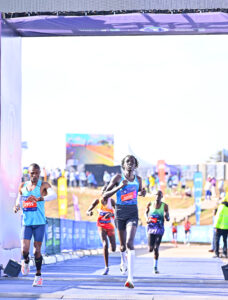
Mercy Rotich won the women’s 42km full marathon, while Orba Chemurgor claimed the 21km half-marathon title. Joy Cheptoyek triumphed in the 10km race, and Mercyline Ajenjo won the women’s 21km wheelchair competition.
The marathon also raised Sh76 million through registration fees, with all the proceeds set to support community programmes under the Standard Chartered Foundation.
The foundation focuses on helping young people learn, earn and grow through education, employability and entrepreneurship. Its programmes aim to expand economic opportunities, particularly for young people, women and persons with disabilities.
Standard Chartered Kenya Chief Executive Officer Birju Sanghrajka said the event was about creating opportunities beyond the finish line.
“Runners from more than 100 nationalities demonstrate sport’s power to connect people; the funds they help raise support young people to build skills, find employment and grow businesses through the Standard Chartered Foundation,” Sanghrajka said.
The marathon’s cumulative fundraising has now reached Sh596 million since the event began.
Beyond the competition, organisers incorporated environmental sustainability into the event, giving every finisher a tree seedling as part of a target to plant 40,000 trees in partnership with Nairobi City County.
Waste segregation, recycling and efforts to reduce single-use plastics were also included in the sustainability programme.
The participation figures further showed that younger generations formed a significant share of the field. Millennials accounted for 50.6 per cent of registrations, while Generation Z represented 33.1 per cent.
Overall, 86 per cent of registered participants were aged 45 and below, reflecting the event’s appeal to younger and middle-aged runners.
The marathon combined sporting achievement with fundraising and environmental action, extending its impact beyond the racecourse.


More Stories
Water as Lifeline, People at Heart: Eastern Wisdom in Suzhou’s Urban Regeneration
Coca-Cola Supports 458,200 Jobs Across COMESA in $3.6 Billion Economic Contribution
From AI to Battery Life: What Makes the Samsung Galaxy A08 LTE an Everyday Companion