
The 2026 Rhino Charge Challenge has secured a KES 114 million commitment from Safaricom PLC and the M-PESA Foundation, reinforcing a long-running partnership that has turned an extreme off-road competition into one of Kenya’s most effective conservation fundraising platforms.
The funding supports the 37th edition of the event, scheduled for May 30 in Samburu, implemented through the Rhino Ark Kenya Charitable Trust, which channels proceeds into protection of Kenya’s key water towers.
Conservation focus anchored on national water towers
The largest share of the contribution—KES 94 million from the M-PESA Foundation—will be directed toward restoration and protection of major forest ecosystems.
Target areas include the Mount Elgon Forest (Suam Block), the Mau Forest Complex across Narok, Kericho and Bomet counties, and the Mount Kenya forest landscape in Tharaka Nithi County.
These ecosystems form part of Kenya’s critical water towers, which sustain agriculture, hydropower generation, and millions of livelihoods across the country.
Event support blends fundraising, teams and technology
Safaricom PLC will provide KES 20 million to support both participation and connectivity during the competition.
KES 17 million will fund three entries: Car No. 44 led by Adil Khawaja, the EV Explorers led by Richard Kiplagat, and the Zambarau Heels on the Wheel all-women team led by Agnes Mwangi. The remaining KES 3 million will enhance communication infrastructure during the event.
A key feature of this year’s support is improved digital connectivity, including 5G deployment to enable real-time communication in the remote and rugged Samburu terrain where the challenge takes place.
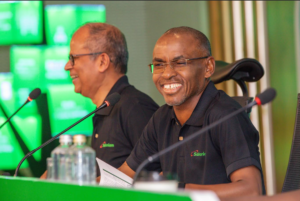
Safaricom CEO Peter Ndegwa said the partnership reflects the company’s sustained investment in environmental and social impact:
“This year, we are proud to commit KES 114 million through the M-PESA Foundation and Safaricom. As a company, sustainability remains central to how we create long-term value for our customers, communities, and the environment. Our support for the Rhino Charge reflects our commitment to practical conservation efforts that protect Kenya’s natural heritage while driving innovation and resilience.”
Teams highlight EV innovation and women inclusion
Beyond conservation, the sponsorship continues to shape participation trends in the event.
Car No. 44 receives KES 15 million, while the EV Explorers and Zambarau teams receive KES 1 million each.
The EV Explorers remain the only electric vehicle entry, using the competition as a real-world test for clean mobility under extreme terrain conditions. The Zambarau team continues to promote women’s participation in motorsport while contributing to conservation fundraising efforts.
A decade-plus impact story in conservation financing
Last year’s edition raised KES 269.5 million for conservation projects, adding to more than KES 2.6 billion mobilized over the years with Safaricom’s support.
According to Rhino Ark, over 650 kilometres of electric fencing have been installed across key forest ecosystems, helping reduce human-wildlife conflict and protecting thousands of households living near forest boundaries.
With about 55 entries expected this year, the Rhino Charge continues to stand out as a rare hybrid of extreme motorsport, corporate social investment, and large-scale environmental conservation funding in Kenya.


More Stories
Safaricom Announces Highest-Ever KSh80.13 Billion Dividend Payout
SanlamAllianz Life Kenya Introduces Flexi Future Plus for Long-Term Wealth Creation
SanlamAllianz targets long-term savers with new wealth and life insurance plan