
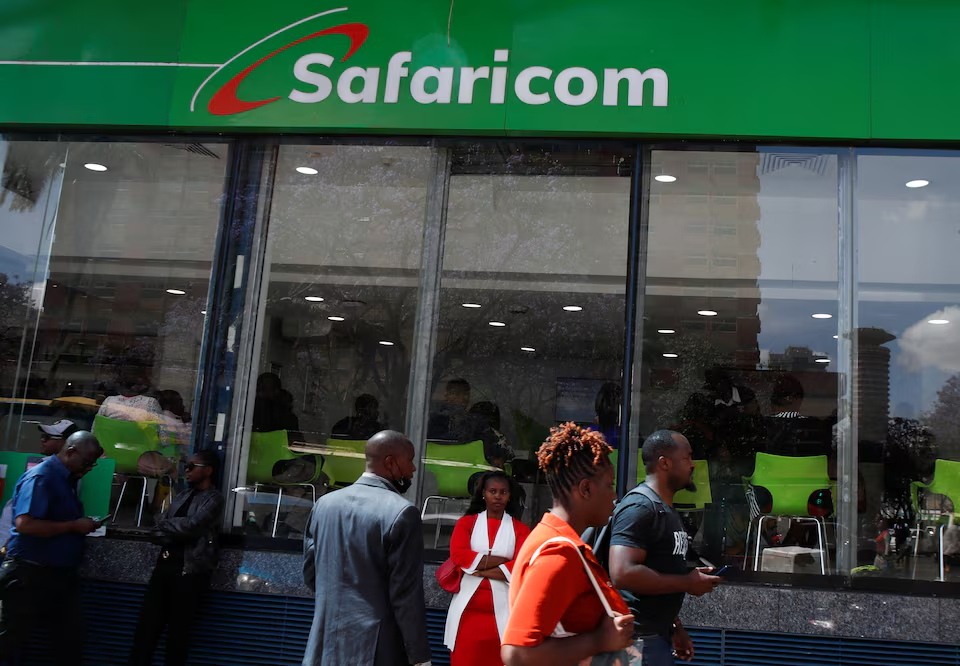
Kenyans taking part in public consultations on the proposed government sale of its Safaricom Plc stake have highlighted the potential of the transaction to fund job creation, youth initiatives, and community development across the country.
The plan involves selling 15 per cent of government shares to Vodafone at Sh34 per share, with the State retaining 35 per cent, valued at between Sh280 billion and Sh300 billion.
Participants in counties such as Kitui, Nairobi, and Nakuru said the divestiture could inject significant resources into programs that expand employment opportunities for young people, without increasing taxes or national debt.
Residents attending the forums stressed the importance of legislation and safeguards to ensure the proceeds are used responsibly.
Many noted that the sale could generate around Sh200 billion, enough to fund stalled infrastructure projects, affordable housing, and social programs that directly impact youth and communities.
During the consultations, Moro MP Kimani Kuria explained that selling shares to Vodafone, a long-term partner with sector expertise, ensures stability and maximizes benefits for the country.
“The government is only selling 15 percent, and the buyer is purchasing at Sh34 per share, compared to the current market rate of Sh28,” he said.
Residents widely supported the divestiture, emphasizing the need for transparency.
Jerusha Muthoni, from New Mukuru Estate, said: “I fully support the move 100 percent because the money will be for development, highlighting the government’s efforts in affordable housing.
Samson Kumenda, from Njiru Sub-County, stressed: “I support the move, but there needs to be transparency in the dealing. Before the government bought Safaricom shares, they had envisioned that they would sell them one day.”
Eddie Odongo, from Bahati Constituency, said the sale was preferable to overtaxing citizens: “This is a good move. The money will be used for development purposes,” while John Maina, also from Bahati, emphasized the importance of allocating proceeds to projects that create employment.
“I support the proposed sale of the government’s stake in Safaricom since it will help accelerate infrastructure development. Once the money is obtained, it should be used wisely,” he said.
Residents also highlighted the need for visible benefits in local communities. Elizabeth Kosgei, from Rongai, jokingly urged the government to prioritize local projects:
“Don’t forget us! Pesa ikitoka, construct roads for us as we pregnant women have been suffering and we will appreciate it,”
she said. Gideon Muthoka, from Kitui, said the sale could reduce Kenya’s reliance on foreign loans while enabling completion of stalled projects.
“The government is just selling what they own — you sell what is yours, and this is what they are doing,” he said.
Nicholas Musili added: “Instead of borrowing and overtaxing Kenyans, let the government sell the shares.”
Participants said their support for the divestiture depends on accountability, transparency, and tangible social outcomes, emphasizing that the sale could be a critical step in boosting youth employment and socio-economic development nationwide.



More Stories
CoA overturns NG-CDF annulment, finds Senate input unnecessary
Kakuzi Expands Domestic Product Line to Offset Export Volatility
Optiven Bets on Thika’s Growth with New Commercial Land Project